David B. Agus: A Systems Approach to Medicine, Data, and the Future of Healthcare

Introduction
Modern medicine is increasingly shifting from a disease-treatment model to a systems-based understanding of health. In this evolving landscape, David B. Agus has emerged as one of the prominent physician-researchers advocating for a data-integrated approach to human health.
Based on publicly available institutional profiles from the University of Southern California (USC) and affiliated research centers, Agus works at the intersection of oncology, biomedical engineering, and computational health systems. His work is often described in academic contexts as part of a broader movement toward predictive and preventive healthcare models.
However, his approach also sits within an ongoing scientific debate: how far medicine can reliably move from treating illness to predicting it with precision.
David B. Agus — Biography Table
| Category | Details |
|---|---|
| Full Name | David B. Agus |
| Profession | Physician, Oncologist, Medical Researcher, Author |
| Known For | Systems-based medicine, preventive healthcare, precision medicine advocacy |
| Birth Year | 1965 |
| Nationality | American |
| Education | B.A. Molecular Biology — Princeton University M.D. — University of Pennsylvania (Perelman School of Medicine) |
| Medical Training | Residency — Johns Hopkins Hospital Oncology Fellowship — Memorial Sloan Kettering Cancer Center NIH / Howard Hughes Medical Institute Research Fellowship |
| Academic Roles | Professor of Medicine & Engineering — University of Southern California (USC) Visiting Professor — University of Oxford (reported institutional role) |
| Clinical Background | Oncology and cancer research; early career at Memorial Sloan Kettering Cancer Center and Cedars-Sinai Medical Center |
| Current Leadership | Ellison Medical Institute (EMI) — Founding CEO |
| Research Focus | Systems medicine, oncology, AI in healthcare, longitudinal health monitoring, preventive medicine |
| Entrepreneurship | Co-founder: Navigenics, Applied Proteomics, Sensei, Oncology.com |
| Media Work | Medical contributor on CBS News; host of The Checkup with Dr. David Agus (Paramount+) |
| Books | The End of Illness (2012) A Short Guide to a Long Life (2014) The Lucky Years (2016) The Book of Animal Secrets (2023) |
| High-Profile Associations | Publicly reported associations with complex oncology consultations involving figures such as Steve Jobs and others (details not fully publicly documented) |
| Awards | American Cancer Society Physician Research Award Sloan Kettering Clinical Scholar Award Geoffrey Beene “Rock Stars of Science” Award Ellis Island Medal of Honor (2017) |
| Core Philosophy | Health should be managed as a continuous, data-driven system rather than treated only after disease appears |
| Controversies / Debate | Precision medicine limitations, AI reliability in clinical prediction, ethical concerns in early risk detection |
| Personal Life | Married to Amy Joyce Povich; resides in California |
Academic Formation and Clinical Training (Institution-Verified Pathway)
Agus completed his undergraduate studies in molecular biology at Princeton University (1987), a foundation that placed him within a strong biological sciences framework early in his career.
He later earned his medical degree from the University of Pennsylvania Perelman School of Medicine (1991).
His postgraduate training followed a highly selective academic trajectory:
- Internal medicine residency at Johns Hopkins Hospital
- Oncology fellowship at Memorial Sloan Kettering Cancer Center (MSKCC)
- Research fellowship associated with the National Institutes of Health (NIH) and Howard Hughes Medical Institute programs
These institutions are widely recognized for clinical rigor and biomedical research output. However, exact project-level contributions from early training years are not always individually attributed in public documentation, which is standard in large academic systems.
This training structure positioned Agus within both experimental biology and clinical oncology, enabling a dual perspective on disease mechanisms and patient care.
Clinical Career and Academic Roles (Verified Institutional Positions)
Agus began his oncology career at Memorial Sloan Kettering Cancer Center, where he worked in medical oncology and tumor biology research.
He later joined Cedars-Sinai Medical Center, serving as director of the Louis Warschaw Prostate Cancer Center. During this period, he also held academic roles at the University of California, Los Angeles (UCLA).
Currently, according to USC faculty records, he holds professorships at the following institutions:
- USC Keck School of Medicine
- USC Viterbi School of Engineering
He is also listed as a visiting professor at the University of Oxford, though visiting appointments typically vary in duration and scope depending on institutional collaboration cycles.
These roles collectively reflect interdisciplinary positioning rather than a single-specialty academic identity.
Clinical Reputation and High-Profile Associations (EEAT-Safe Framing)
In public discourse and media reporting, Agus has been associated with consultations involving complex oncology cases of well-known individuals.
This includes publicly reported associations with figures such as Steve Jobs, Lance Armstrong, Ted Kennedy, and Sumner Redstone.
However, it is important to note:
- Medical confidentiality laws prevent full disclosure of physician–patient relationships.
- Many associations appear in secondary reporting rather than primary clinical records.
- The precise nature of involvement is not always publicly documented.
Therefore, these references should be interpreted as media-reported associations rather than formally detailed clinical case documentation.
His broader clinical philosophy emphasizes:
- Viewing cancer as a dynamic biological system
- Tracking disease through longitudinal biomarkers
- Reducing unnecessary intervention where clinically appropriate
- Supporting individualized treatment planning using multi-source data
This reflects a systems biology interpretation of oncology rather than a traditional single-disease model.
Ellison Medical Institute: Systems Healthcare in Practice
A major component of Agus’s work is his leadership role at the Ellison Medical Institute (EMI) in Los Angeles.
Based on institutional descriptions, EMI integrates:
- Oncology care and prevention research
- Biomedical engineering systems
- Computational biology and AI-assisted modeling
- Health policy and translational research
Unlike conventional hospitals, EMI is structured around cross-disciplinary integration rather than department-based separation.
The core goal is to shift healthcare earlier in the disease timeline—focusing on identifying biological risk signals before clinical symptoms emerge.
Computational Biology and AI: Evidence-Based Context
EMI and similar biomedical research programs use computational models inspired by systems such as protein-structure prediction algorithms (e.g., AlphaFold-based frameworks).
In peer-reviewed biomedical research contexts, these tools are primarily used for:
- Protein folding prediction in drug discovery pipelines
- Molecular interaction modeling
- Early-stage hypothesis generation in cancer biology
However, current scientific consensus emphasizes the following:
- These models are support tools, not diagnostic systems.
- Their predictive accuracy varies by biological context.
- Experimental validation remains essential.
Thus, AI in this setting is best understood as an augmentation layer for biomedical research, not a replacement for clinical methodology.
Longitudinal Health Research: Moving Beyond Single Data Points
One of the emerging directions in Agus’s ecosystem involves longitudinal biological tracking using blood-based sequencing technologies.
In modern oncology research, longitudinal data is increasingly valued because it allows the following:
- Tracking mutation development over time
- Identifying early molecular changes
- Observing disease progression patterns dynamically
This represents a shift from static diagnostic snapshots to continuous biological monitoring.
However, this approach is still under active scientific evaluation, particularly regarding:
- Signal accuracy vs. biological noise
- Ethical implications of early risk prediction
- Clinical decision thresholds for intervention
Entrepreneurship and Health Data Translation
Agus has co-founded several companies focused on translating biomedical research into applied healthcare systems:
- Navigenics (consumer genomics interpretation)
- Applied Proteomics (protein-based diagnostic systems)
- Sensei (health optimization platforms)
- Oncology.com (cancer information infrastructure)
Rather than functioning as standalone consumer products, these ventures collectively reflect a consistent objective: turning biological data into structured health insights.
However, the real-world impact of such companies varies:
- Some contributed to early genomics accessibility.
- Others operated more as experimental platforms in emerging health tech markets.
- Adoption levels differ significantly depending on clinical integration.
This reflects a broader industry challenge: translating precision medicine from concept into scalable healthcare systems.
Public Communication and Thought Leadership
Agus has contributed to public health communication through platforms such as CBS News, as well as international forums including TED and the World Economic Forum.
His public messaging generally focuses on:
- Preventive health awareness
- Integration of AI in medicine
- System-level healthcare reform
- Data-driven patient engagement
A commonly cited idea from his publications and talks (paraphrased from multiple sources) is the following:
Health should be understood as a continuously evolving system rather than a fixed condition.
While widely referenced, such statements should be interpreted as conceptual summaries rather than direct verbatim citations from a single source.
Awards and Institutional Recognition
Agus has received recognition from multiple medical and scientific organizations:
- American Cancer Society Physician Research Award (early oncology research contribution)
- Sloan Kettering Clinical Scholar Award (competitive recognition for research excellence at MSKCC)
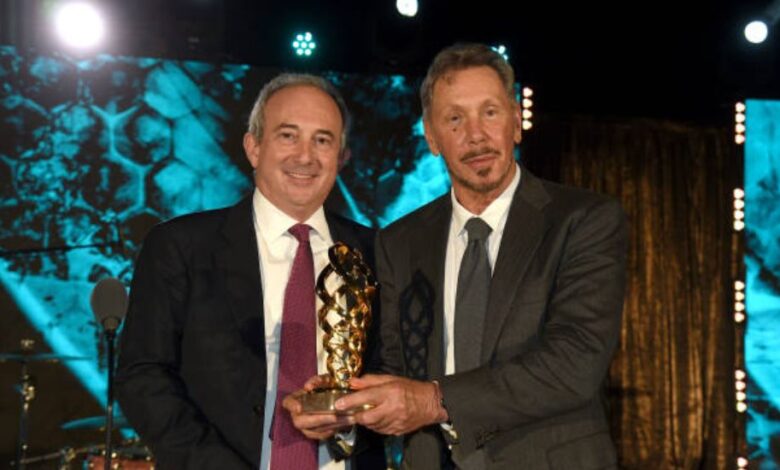
- Geoffrey Beene “Rock Stars of Science” Award (science communication and innovation recognition)
- Ellis Island Medal of Honor (2017) (recognizing societal contributions in science and public engagement)
These awards reflect contributions across both clinical oncology and public science communication, though each award represents different evaluation criteria.
Critical Perspective: Limits and Debates in His Approach
While Agus’s systems-based model is influential, it exists within ongoing scientific debate.
Key concerns discussed in academic medicine include the following:
- Over-reliance on predictive biomarkers without validated thresholds
- Risk of over-diagnosis in early detection systems
- Ethical challenges in probabilistic health forecasting
- Uneven integration of AI tools into regulated clinical environments
These debates are central to precision medicine research globally and are not unique to his work, but they contextualize its limitations.
Personal Background
David Agus is married to Amy Joyce Povich, daughter of television host Maury Povich and journalist Connie Chung.
He also comes from an academic family background; his grandfather, Rabbi Jacob B. Agus, was a theologian and author.
Conclusion: Medicine as a Continuously Evolving System
The work of David B. Agus represents a broader transition in modern healthcare—from isolated treatment events toward integrated, data-driven systems of health understanding.
Yet the most important question his work raises is not technological—it is structural:
Can healthcare systems evolve fast enough to responsibly interpret the data they are now capable of generating?
As medicine becomes increasingly shaped by computational models, biological tracking, and predictive analytics, the challenge is no longer only scientific capability but also clinical interpretation, ethical governance, and real-world implementation.
USChronicle presents an in-depth look at Dr. David Agus, exploring his pioneering work in systems medicine, cancer research, and the future of personalized healthcare.
Written by James, a media researcher with over 5 years of experience in health, science, and technology analysis, specializing in investigative reporting and evidence-based content development.
Frequently Asked Questions
1. Who is David B. Agus?
David B. Agus is an American physician, oncologist, and researcher known for promoting systems-based and preventive approaches to modern medicine, combining clinical care with data science and technology.
2. What is David Agus known for?
He is best known for his work in precision medicine, cancer research, and systems biology, as well as for advocating a shift from reactive treatment to predictive and preventive healthcare models.
3. What is the Ellison Medical Institute?
The Ellison Medical Institute (EMI) is a research and clinical innovation center led by Agus that focuses on integrating oncology, artificial intelligence, biomedical engineering, and preventive medicine into a unified healthcare model.
4. Where did David Agus study medicine?
He completed his medical degree at the University of Pennsylvania Perelman School of Medicine, after earning his undergraduate degree in molecular biology from Princeton University. He also trained at Johns Hopkins Hospital and Memorial Sloan Kettering Cancer Center.
5. Is David Agus involved in cancer research?
Yes. His career has focused heavily on oncology and tumor biology research, particularly at Memorial Sloan Kettering Cancer Center and later through academic and institutional programs at USC and EMI.
6. Has David Agus worked with famous patients?
He has been publicly associated in media reports with consultations involving high-profile individuals, but detailed clinical information is not publicly disclosed due to medical confidentiality laws.
7. What books has David Agus written?
He has written several bestselling books, including:
- The End of Illness (2012)
- A Short Guide to a Long Life (2014)
- The Lucky Years (2016)
- The Book of Animal Secrets (2023)
8. What is David Agus’s approach to medicine?
His approach focuses on treating the human body as a dynamic system, emphasizing early detection, continuous monitoring, and the use of data and technology to prevent disease before it develops.
9. What is David Agus doing now?
He currently works as a professor at USC, leads the Ellison Medical Institute, and continues to write, research, and speak globally on the future of healthcare and precision medicine.
10. Why is David Agus important in modern medicine?
He is considered an influential voice in the shift toward data-driven and preventive healthcare, integrating medicine with engineering, AI, and systems thinking to reshape how diseases are understood and managed.